XVIII. Verleihung der Arenbergpreise für Geschichte, Brüssel
Zurück zur Übersicht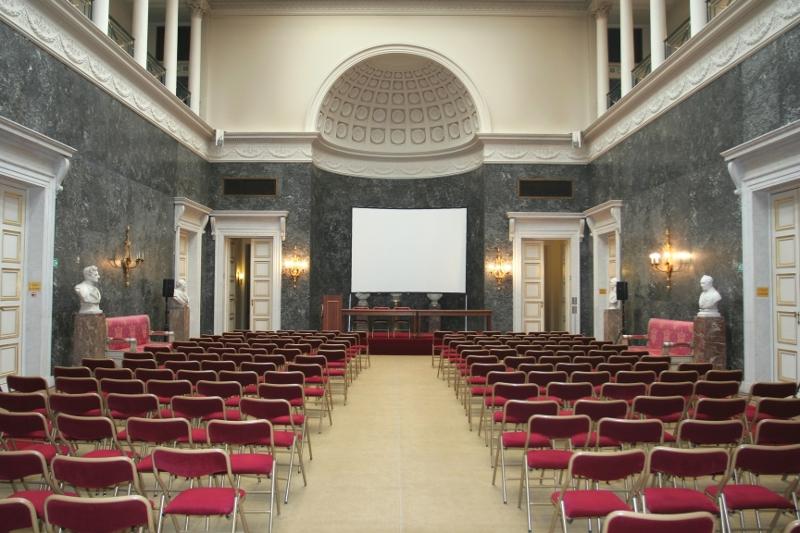
Die Preisverleihung "Herzog von Arenberg" findet am Freitag, dem 4. Dezember 2026, im Palast der Akademien in Brüssel statt.
Announcement of the History Prizes “Duke of Arenberg"
The Arenberg Foundation is delighted to announce that this year’s Arenberg European History Prize will be awarded to Dr. Theodor Dunkelgrün’s The Multiplicity of Scripture: The Making of the Antwerp Polyglot Bible (Pontifical Institute of Mediaeval Studies). The House of Arenberg History Prize is awarded to Dr. Ulrike Müller’s Private Collectors in Brussels, Antwerp and Ghent, ca. 1780–1914. Between Public Relevance and Personal Pleasure (Brepols).
The Arenberg Prize in European History “is awarded to the best work that sheds new light on Europe’s history” and/or “that uses the tools of the historian to inspire debate about Europe’s present and future” while the House of Arenberg History Prize “is awarded to the best work that makes use of archival collections relating to the House of Arenberg”.
For more information on both prizes, see the website of the Arenberg Foundation: https://www.arenbergfoundation.eu/en/events/history-prizes-duke-darenberg
The Arenberg European History Prize
In The Multiplicity of Scripture, Theodor Dunkelgrün tells the story of the improbable creation of one of the most extraordinary works of Christian scholarship of the sixteenth century: the Antwerp Polyglot Bible – a Bible in Hebrew, Greek, Latin, Aramaic and Syriac versions including a library of reference tools to study and read them. The creation of the Antwerp Polyglot Bible offers an inclusive vision of Christian Scriptures that stands as an abiding testimony to the ability of a small group of thoughtful, committed people to uphold the high values of European civilization in dark and dreadful times.
Theodor Dunkelgrün’s book works superbly well on two separate levels: On one level, this is a stellar and ground-breaking account of the creation of one of the great Polyglot bibles of the early modern period. But on another level, this is a most fascinating analysis of how the marketplace of ideas in Renaissance Europe worked at times of utter turmoil. His is a book about how people of different religions and persuasions navigated their fundamental differences to stay alive, sometimes succeeding so, and in the process reweaving the bonds of civilization and creating, with the Polyglot Bible, a humanist masterpiece, and sometimes failing, being consumed and being destroyed by it.
In his book Dr. Dunkelgrün draws together the history of the manuscript, the bible, the printing process, the network of scholars, the history of the readership, of ecumenism and of Europeanness in combining languages and traditions that make up the European Christian civilization. It is as much a history of the way books like this were published, how they were understood, how they were disseminated, and how they helped to create intellectual communities. It is a history from conception to reception, from readership to critics, which is core to the fruits of Europe’s humanistic legacy.
The Multiplicity of Scripture is a truly European story and a magnificent account of Renaissance humanism. By extension, this is also a musing for our own times about how men and women of ideas (and of faith) act and interact when both their individual and collective survival is at stake.
Dr. Theodor Dunkelgrün is the Director of the Institute of Jewish Studies at the University of Antwerp.
The House of Arenberg History Prize
Private Collectors in Brussels, Antwerp and Ghent aims to analyze private art collectors in the 19th century not merely as individual collectors, but as actors operating within the tension between private collecting passion and public impact. Central to the study is the question of how private collections in the Belgian cities of Brussels, Antwerp, and Ghent shaped both personal identities and urban and national culture.
The book includes a dedicated chapter on the collection of the ducal Arenberg family, highlighting the outstanding role played by the Dukes of Arenberg as private art collectors in 19th-century Brussels. The Arenberg collection - particularly under Duke Prosper Louis (1785–1861) - was considered the most significant private art collection in Belgium and was frequently cited in travel guides and accounts. It attained the status of a veritable museum, featuring regular opening hours, admission fees, and guided tours, all of which underscored its public accessibility.
As Ulrike Müller demonstrates, the collection reflected not only aesthetic preferences but also the family’s political and social identity, serving as an instrument for self-presentation and the legitimation of their social standing. Archival sources from the Arenberg Archive and the Belgian State Archives provide deep insight into acquisition strategies, networks, and the spatial arrangement of the collection. In doing so, the book establishes the Arenberg collection as a prime example of the interplay between private collecting and public culture in the 19th century.
Private Collectors in Brussels, Antwerp and Ghent can be regarded as an important contribution to the history of collecting, urban history, and 19th-century cultural history, as it understands private collectors as complex, multifaceted actors in the public sphere — not merely as passive owners of artworks. The book provides a model for studying private and public action in art and cultural history that goes beyond mere object analysis. Through the systematic documentation of a broad group of subjects, it demonstrates that collecting is a socio-historical phenomenon that sheds light on class structures, gender roles, national identity, and urban cultural policy.
Dr. Ulrike Müller is Assistant Professor of Heritage Studies at the University of Antwerp, Belgium, and Postdoctoral researcher at the Royal Museums of Fine Arts of Belgium/Constantin Meunier Museum, Brussels.
Prize Award Ceremony
The History Prizes “Duke of Arenberg” will be awarded to Theodor Dunkelgrün and Ulrike Müller in Brussels on 4 December during the Arenberg Foundation’s History Prize Symposium on ‘Meeting the Challenges of Today: The Lessons and Legacy of Renaissance Christian Humanism’.
For media enquiries, please contact Isabelle vanden Hove, aca@skynet.be
Enghien/Edingen, 21 October 2026